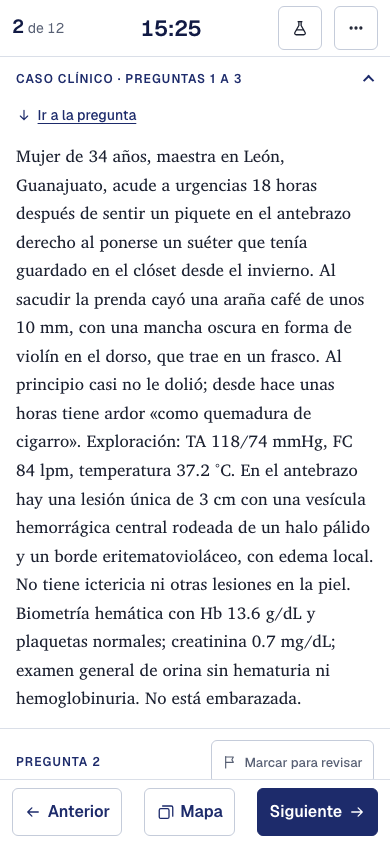
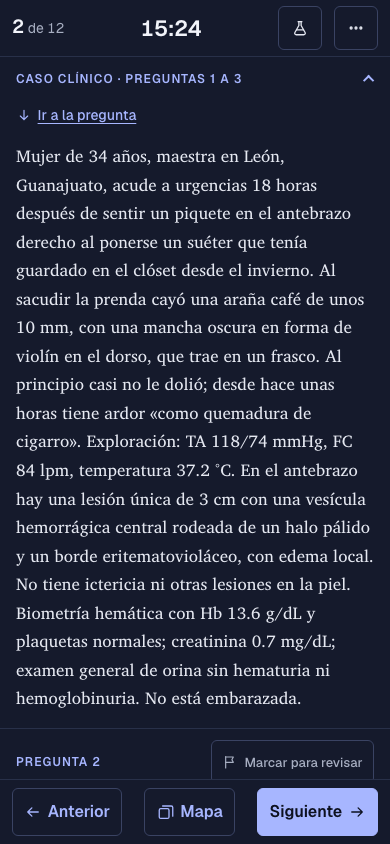
Mocks in the exam's format
Clinical cases of 2 or 3 questions with 4 options and a clock, at the pace we estimate for the exam. You answer instead of rereading.
Across 222 classroom studies with 48,478 students, practising with questions improved learning (g = 0.499); the size of the effect depended, among other things, on whether the practice had the same format as the final exam.1
Every option, explained
Why the right one is right and why each of the others is not, with the code, year and section of the GPC behind it.
In 40 studies of computer-based feedback, elaborated feedback did better (0.49) than giving only the right answer (0.32) and far better than saying only right or wrong (0.05).2
The areas, with their weight
Mocks mix the seven areas by the weight we estimate for each, so you practise telling similar cases from different areas apart.
In reading electrocardiograms, mixed practice reached 46% correct diagnoses against 30% for blocked practice.3
Short lessons
437 lessons on 405 of the 504 guidelines and standards cited: the essentials, the key facts and the common traps, in 3 to 6 minutes of reading. Each one takes you on to practise its cases.
Rereading helps less than practising with questions: across 242 studies, d = 0.47 against 0.74.4
These studies are not results of Simulacro ENARM.